Bed bugs are difficult to eliminate because they hide in mattress seams, bed frames, furniture joints, baseboards, and other narrow spaces. Although high temperatures can kill them, successful treatment depends on reaching the right temperature for a sufficient amount of time.
Understanding the bed bug killing temperature helps homeowners choose an effective treatment method and avoid wasting time on approaches that only heat the surrounding air without reaching hidden insects and their eggs.
What Temperature Kills Bed Bugs?
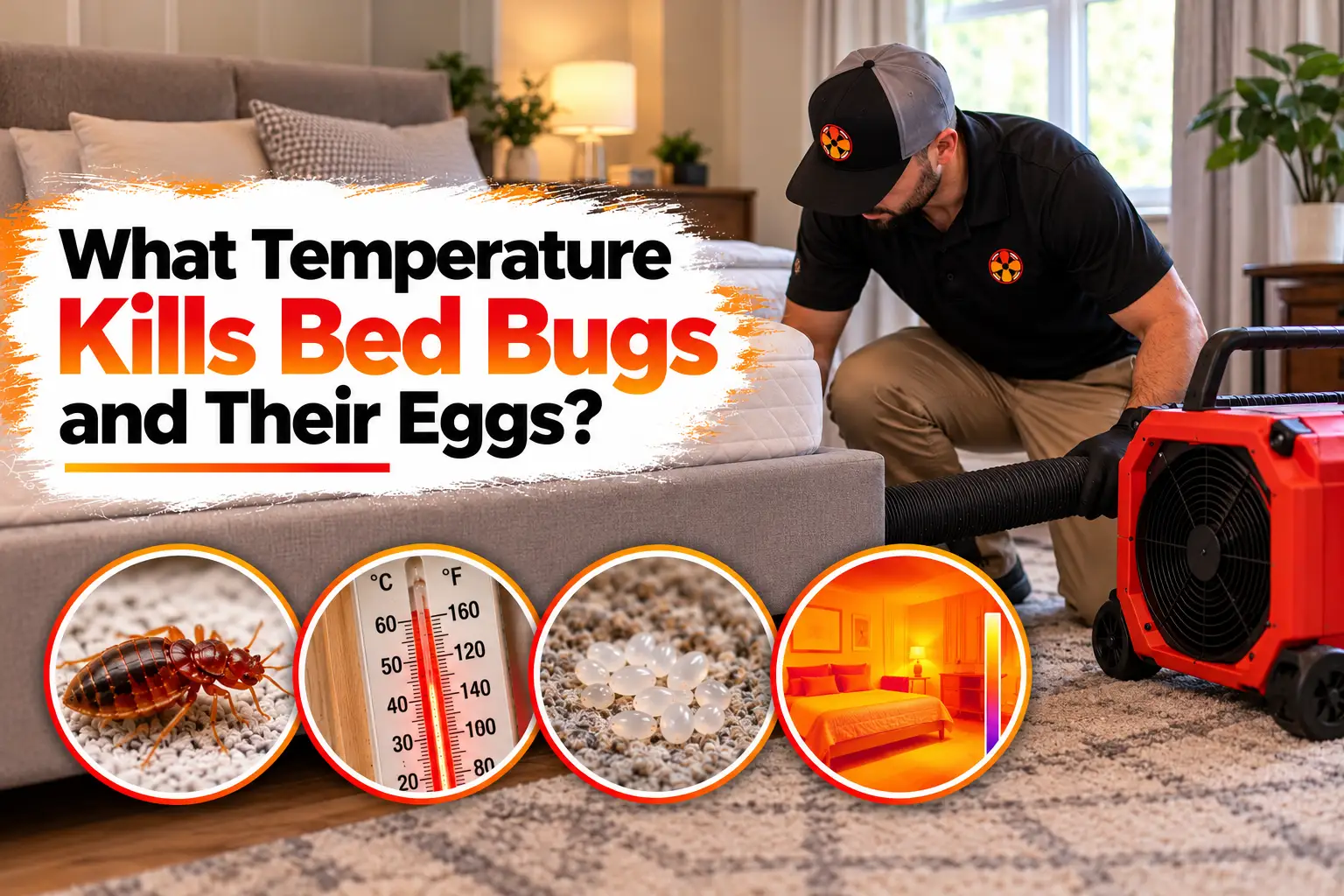
Heat can kill adult bed bugs, nymphs, and eggs when the insects experience a sufficiently high temperature for the required exposure duration. However, eggs are generally more heat-resistant than adult bed bugs, so reaching a lethal temperature throughout an infested area is essential.
Research published in Insects found that bed bug eggs required approximately 71.5 minutes of exposure at 118°F (48°C) to achieve 99% mortality. At 122°F (50°C), all life stages, including eggs and adults, experienced 100% mortality almost instantly.
Here are useful temperature benchmarks:
| Temperature | Approximate exposure time | Practical meaning |
| 113°F (45°C) | Up to 7 hours for eggs | Requires prolonged, controlled heating |
| 118°F (48°C) | Approximately 90 minutes | A commonly cited minimum treatment benchmark |
| 120°F (49°C) | 90 minutes | EPA guidance for heating infested items and areas |
| 122°F (50°C) | Less than 1 minute under specified research conditions | Lethal exposure for all tested life stages |
These figures are based on research and pest-control guidance, not a guarantee for every infestation. The required exposure depends on the temperature actually reached where bed bugs hide.
Why Temperature Must Be Maintained, Not Just Reached
Briefly heating a room to a target temperature does not mean every bed bug has received a lethal dose of heat. The temperature must penetrate furniture, bedding, and other hiding places, and the required exposure duration begins when the relevant area reaches the target.
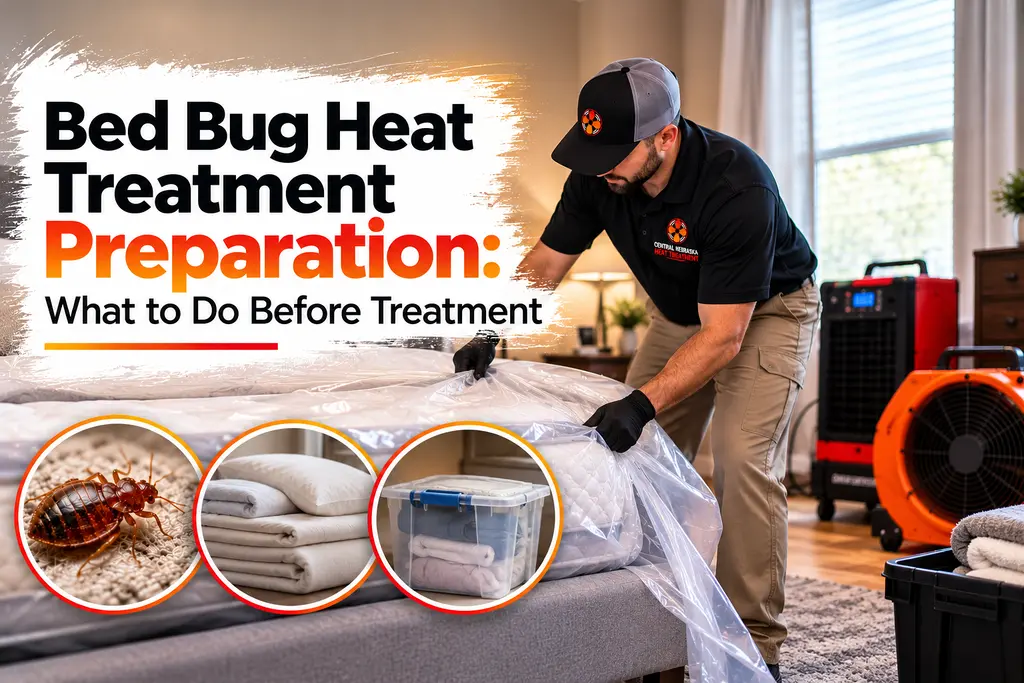
This is where heat penetration and exposure duration matter. Thick mattresses, stacked belongings, upholstered furniture, and enclosed spaces may warm slowly, creating cold spots where bed bugs and eggs survive. Proper bed bug heat treatment preparation can help homeowners organize belongings and follow technician instructions before treatment begins.
Professional treatments use temperature probes and thermal sensors to monitor different locations. Technicians check areas that heat slowly rather than relying on a single thermometer reading near the heater.
| Helpful note: A room thermometer measures the temperature at one location. It does not confirm the temperature inside a mattress seam, furniture joint, or wall void. |
What Is the Best Heat Treatment Temperature?
For whole-room treatment, approximately 120°F to 135°F (49°C to 57°C) is a commonly used operating range, although the appropriate target depends on the equipment, treatment protocol, and materials being heated.
The important distinction is between the operating temperature of the room and the temperature inside an infested object. The treatment must deliver a lethal combination of temperature and time where the insects are present.
Professional heat treatment uses controlled heating, air circulation, and strategically placed sensors to identify cold spots. Technicians adjust equipment and monitor conditions throughout the process to improve heat distribution.
Central Nebraska Heat Treatment focuses on the principle that successful bed bug elimination requires more than simply making a room hot. Proper monitoring and heat distribution help address bed bugs across their different life stages.
Can DIY Heat Methods Kill Bed Bugs?
Some household methods work well for specific items, but they are not interchangeable with whole-room heat treatment.
- Clothes dryer: The U.S. Environmental Protection Agency recommends placing suitable clothing and bedding in a dryer on high heat for 30 minutes. Washing alone may not kill all bed bugs and eggs.
- Hair dryers: They heat only small, exposed areas and cannot reliably treat deep hiding places.
- Clothes irons: Direct heat may kill exposed insects, but uneven contact leaves untreated areas.
- Household space heaters: These cannot reliably deliver lethal heat throughout an infested room and may create serious fire or electrical hazards.
Avoid using propane heaters, fireplaces, or household thermostats to heat an entire home for bed bug control. The EPA warns that these approaches are ineffective and potentially dangerous.
Does Cold Temperature Kill Bed Bugs and Their Eggs?
Cold can also control bed bugs, but the exposure duration matters. Simply leaving infested belongings outside during winter is unreliable because outdoor temperatures fluctuate and protected insects may not become cold enough.
The University of Minnesota recommends maintaining items at 0°F (-18°C) for at least 72 hours, with 96 hours providing an additional safety margin. The required temperature must be reached throughout the item, not just in the freezer air.
For most households, using a suitable dryer for washable items or arranging professional treatment for an established infestation is more dependable than attempting improvised temperature control.
Frequently Asked Questions
What temperature kills bed bugs instantly?
At 122°F (50°C), research found immediate mortality under the tested conditions. However, real-world treatment must account for cold spots and ensure that the target temperature reaches the insects.
What is the bed bug egg killing temperature?
There is no single temperature that guarantees instant egg mortality under every condition. Research indicates that approximately 118°F (48°C) for 71.5 minutes can achieve complete egg mortality under specified test conditions.
Is 20 minutes enough to kill bed bugs?
Twenty minutes may be insufficient if the required temperature has not reached every infested area. For washable items, follow established dryer guidance, including the EPA’s recommendation of 30 minutes on high heat.
How do professionals know when bed bugs have died?
Professionals monitor temperatures at multiple locations using probes and thermal sensors. They assess whether the required temperature and exposure duration have been achieved in areas where bed bugs hide.
Can heat treatment eliminate an entire infestation?
A properly conducted treatment can kill bed bugs across their life stages, but untreated areas or subsequent introductions can lead to another infestation. Inspection, monitoring, and appropriate follow-up remain important.
Final Thoughts: Focus on Getting the Temperature Right
Effective bed bug control depends on reaching a lethal temperature for long enough to kill both active insects and eggs. While temperatures around 118°F to 122°F are important research benchmarks, the temperature inside hiding places matters more than a room’s average reading.
For established infestations, Central Nebraska Heat Treatment can be considered when evaluating a professional approach that accounts for temperature monitoring, heat penetration, and the conditions needed for effective treatment.