Bed bugs can hide in mattress seams, bed frames, furniture joints, and tiny cracks that are easy to overlook. When an infestation spreads, choosing the right treatment matters. Should you raise the temperature throughout the affected space, or use insecticides to target hiding places and provide residual protection?
The answer to Heat Vs Chemical Bed Bug Treatment depends on the size of the infestation, the layout of your home, and how thoroughly the treatment is carried out. For Nebraska residents, understanding the strengths and limitations of both methods can help you make a more informed decision.
How Heat Treatment Targets Bed Bugs
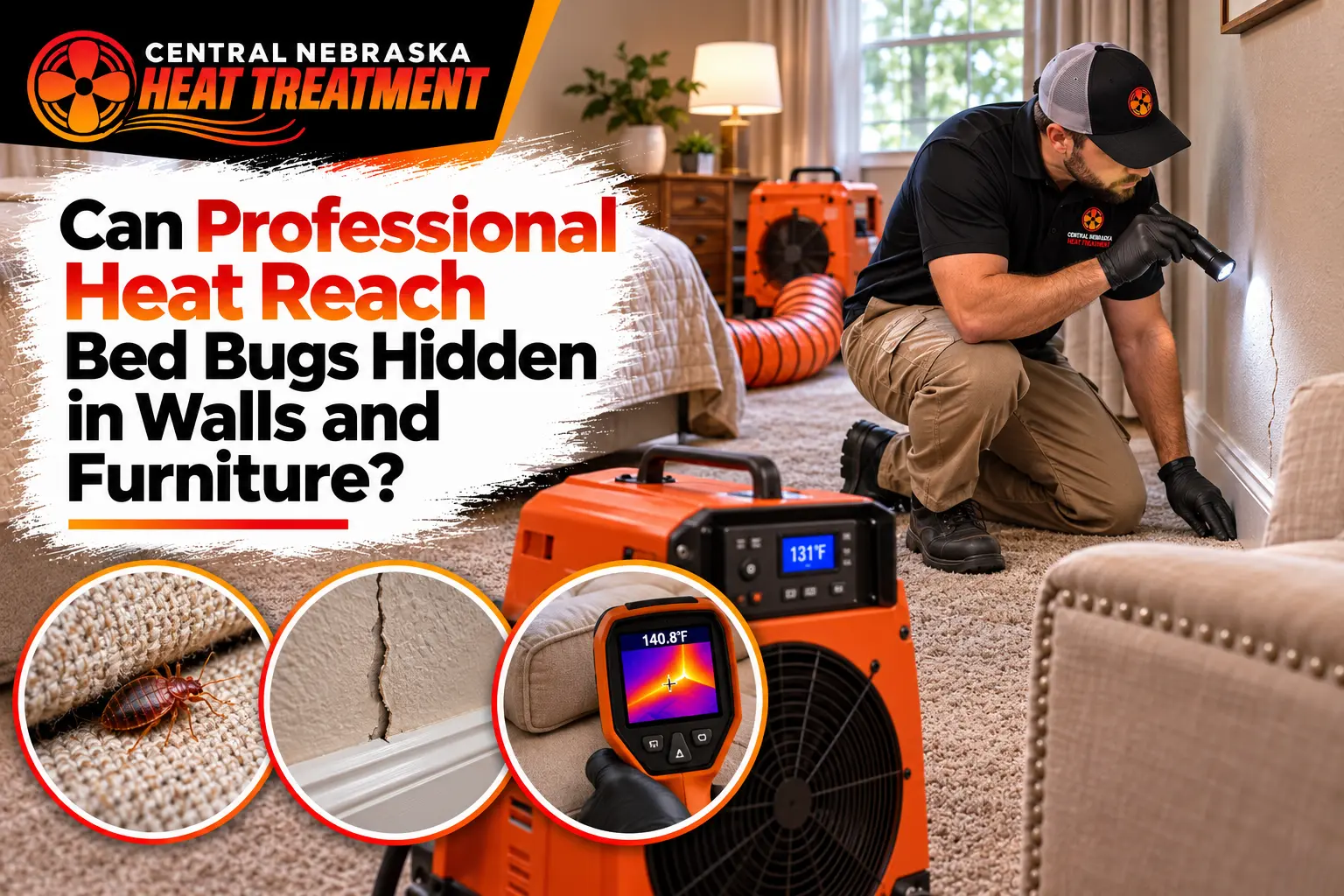
Professional heat treatment, also called thermal remediation, uses specialized equipment to raise temperatures throughout an infested area. During treatment, technicians track temperatures to ensure enough heat reaches bed bugs concealed in furniture, fabrics, and other hard-to-reach areas.
The University of Nebraska–Lincoln Extension reports that professional whole-space heat treatments typically take 6–8 hours. The actual schedule depends on the property, preparation, and treatment conditions.
Heat can kill bed bugs at different life stages, including eggs, when the required temperature and exposure duration reach the target. The challenge is temperature penetration: the air may become hot before heat reaches deep inside furniture or other insulated hiding places.
Heat treatment may be a strong option when:
- Bed bugs are spread across multiple rooms or belongings.
- You want to avoid relying entirely on insecticides.
- A trained technician can monitor temperatures in difficult-to-reach areas.
Heat has no residual effect, however. Bed bugs brought home later in luggage, clothing, or used furniture can start another infestation.
What Chemical Treatment Does Differently
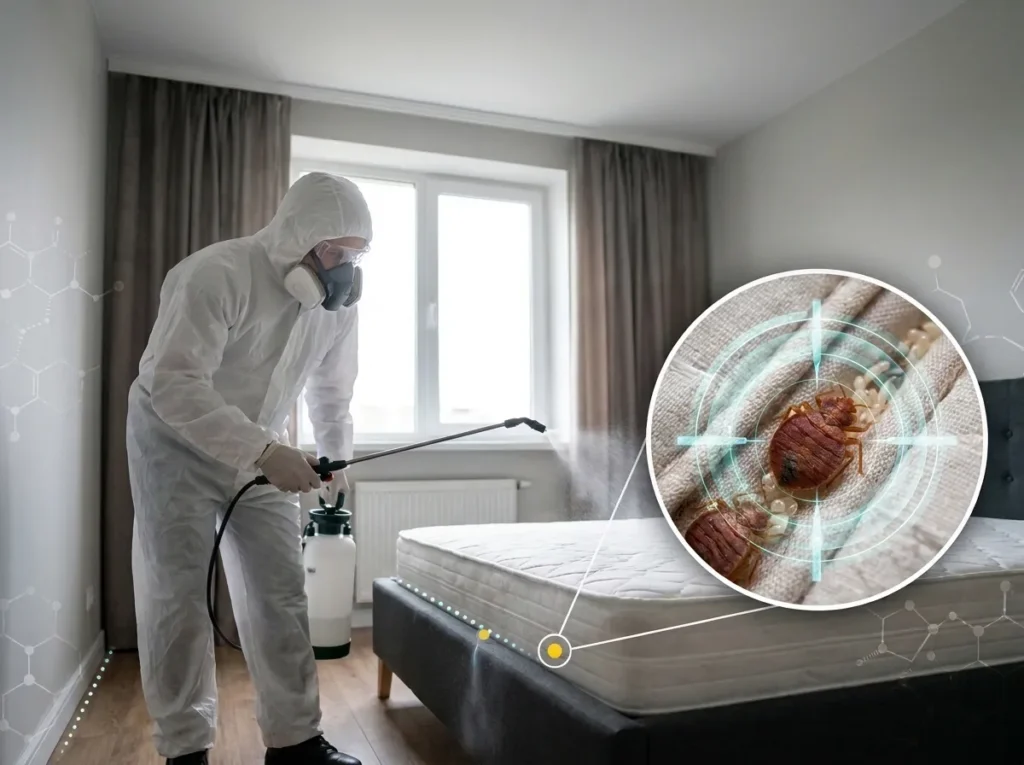
Chemical treatment uses registered insecticides to control bed bugs in suitable hiding places and resting areas. Depending on the product and label, a professional may apply liquid treatments or dust formulations to cracks, crevices, baseboards, and other appropriate locations.
Some products leave residual protection, continuing to affect bed bugs that cross treated surfaces after the application. This can help control insects that were missed initially or emerge from eggs later. However, some insecticides do not eliminate the eggs, so additional treatment visits may be required.
One major challenge is insecticide resistance. Some bed bug populations are resistant to commonly used chemical classes, so a product that worked elsewhere may not perform as expected. Professionals may need to select different active ingredients and combine chemical application with inspection and monitoring.
Don’t use bug bombs or foggers as an easy fix, because they often miss hidden pests. These products rarely penetrate the narrow spaces where bed bugs shelter, and improper use may pose health risks.
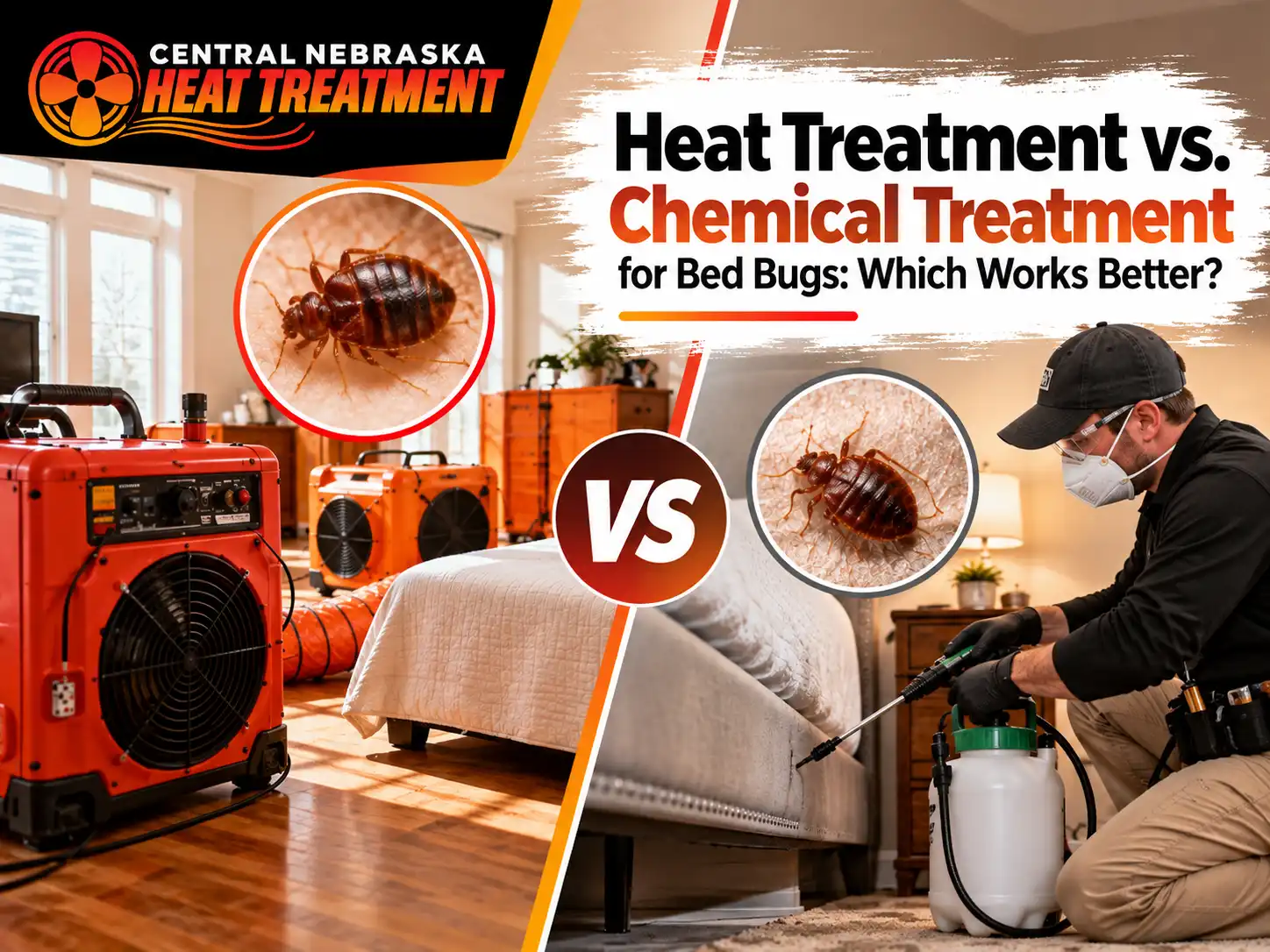
Heat vs. Chemical Treatment: Key Differences
| Factor | Heat treatment | Chemical treatment |
| Bed bug eggs | Can kill eggs when target conditions are reached | Effectiveness varies by product |
| Hidden insects | Heat must penetrate each hiding area | Products must reach or affect bed bugs in treated areas |
| Residual protection | None after treatment | Some products provide residual activity |
| Insecticide resistance | Not affected by insecticide resistance | Resistance can reduce effectiveness |
| Follow-up | Inspection and monitoring remain important | Repeat applications may be needed |
| Main concern | Uneven heating or missed cold spots | Missed hiding places or ineffective products |
Neither method guarantees success on its own. Preparation, technician skill, infestation severity, and post-treatment monitoring all influence treatment efficacy.
Which Method Makes More Sense for Nebraska Homes?
The best choice depends on what an inspection reveals. Heat may suit a widespread infestation where technicians can safely heat the affected space and monitor temperature penetration. Chemical treatment may be useful when targeted applications and residual protection are important, particularly around suitable cracks and crevices.
Nebraska-specific guidance is useful here. The University of Nebraska–Lincoln Extension recommends professional help because bed bugs are difficult to eliminate and notes that many treatment plans require at least two visits or applications. It also recommends monitoring for 6–8 months after the original treatment if you want to catch signs of a persistent infestation.
That does not mean every home needs months of active treatment. It means one apparently successful visit should not replace careful monitoring.
Could a Combined Treatment Work Better?
Integrated Pest Management (IPM) brings together inspection, treatment, prevention, and follow-up rather than depending on one control method. Depending on the infestation, a pest control professional may recommend heat alongside targeted insecticide use or other suitable measures.
A combined approach can address different weaknesses: heat targets insects exposed to lethal temperatures, while selected residual products may help control survivors or newly emerging bugs in appropriate locations. The plan should be based on the inspection, not automatically applied to every property.
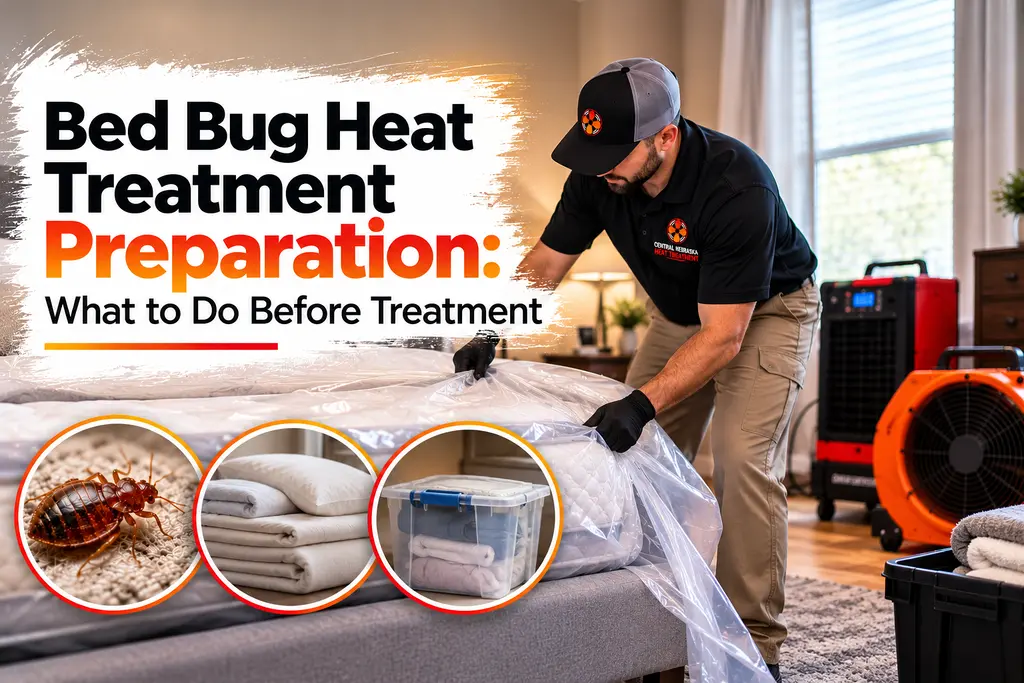
Homeowners can also support the process by reducing clutter, laundering suitable fabrics according to care instructions, vacuuming carefully, and following the technician’s preparation guidance. Do not move untreated belongings into clean rooms, as this can spread bed bugs.
For a clearer idea of scheduling, read professional heat treatment duration before arranging time away from your property. Ask the provider which items need to be removed or protected, too.
What Affects the Final Cost and Success?
A lower price does not always mean the treatment offers better overall value. Before comparing quotes, understand the factors that affect bed bug heat treatment costs in Nebraska. Compare the scope of work, follow-up visits, monitoring plan, and what happens if bed bugs remain.
Before booking, ask the provider:
- Will the inspection cover adjoining rooms and furniture?
- How will treatment conditions be monitored?
- Are follow-up visits included or charged separately?
- What should you do to reduce reinfestation risk?
Also, be cautious with do-it-yourself products such as diatomaceous earth. Only use products registered and labeled for bed bug control, exactly as directed. Applying excess dust or using the wrong formulation can create unnecessary exposure without solving the infestation.
Frequently Asked Questions
Does heat treatment kill bed bug eggs?
Yes, when the eggs receive the required temperature for sufficient time. Eggs protected inside poorly heated objects may survive if treatment conditions are not reached.
Is chemical treatment less effective than heat?
Not always. Results depend on the products selected, resistance, application quality, hiding places, and follow-up. Neither method is automatically best for every infestation.
How long does professional heat treatment take?
The University of Nebraska–Lincoln Extension gives a typical range of 6–8 hours for whole-space heat treatment. Property conditions and preparation can affect the schedule.
Can bed bugs return after heat treatment?
Yes. Heat leaves no residual protection, so new bed bugs can enter on luggage, clothing, or secondhand furniture. Monitoring and prevention remain important.
Should I combine heat and chemical treatment?
Sometimes. A professional may recommend an integrated plan when one method alone is unlikely to address all hiding places or ongoing risks.
Are bug bombs a good way to eliminate bed bugs?
No. Foggers may not reach hidden insects and can pose safety risks when used incorrectly. Follow professional guidance and use only approved products according to their labels.
Final Thoughts: Choosing a Reliable Bed Bug Treatment
Heat and chemical treatments can both play a role in bed bug control, but results depend on proper inspection, complete coverage, and follow-up. Heat offers broad, non-insecticidal control when lethal conditions reach hiding places; chemical treatment can provide targeted and sometimes residual protection. For some homes, a carefully planned combination is the better fit.
CENTRAL NEBRASKA HEAT TREATMENT can help property owners with professional heat treatment options and prepare for the next step. Ask questions about coverage, monitoring, and follow-up before choosing a treatment plan, and act promptly when you find clear signs of bed bugs.