
When bed bugs show up in your mattress, box spring, or bedroom furniture, one of the first questions is how quickly you can get your home back. Professional heat treatment can often eliminate an infestation in a single day, but the appointment involves more than switching on heaters and waiting for the room to warm up.
Understanding bed bug heat treatment duration helps you plan your day, prepare your belongings, and recognize why a technician may need extra time to reach hidden insects and their eggs.
The Typical Timeline: What to Expect on Treatment Day
The University of Nebraska–Lincoln reports that professional whole-room heat treatments typically take 6–8 hours. The actual appointment may be shorter or longer depending on the property, infestation, and equipment setup.
| Treatment stage | What happens | Approximate timing |
| Equipment setup | Technicians position heaters, fans, and temperature sensors | Varies |
| Heating phase | Equipment raises room temperatures gradually | Varies |
| Exposure and monitoring | Technicians verify lethal conditions reach hiding places | Several hours may be needed |
| Cooling and final checks | Equipment is shut down when appropriate, and the property is checked | Varies |
These are stages, not fixed time slots. Heating, temperature monitoring, and exposure requirements overlap, so their durations should not simply be added together. Your technician can provide a more accurate schedule after assessing the property.
Why the Heating Process Takes Several Hours
Heat treatment works by exposing bed bugs at all life stages to sufficiently high temperatures for the required period. However, the air temperature is only part of the equation. Heat must also penetrate mattresses, furniture, and other places where insects hide.
Three stages determine how the treatment progresses:
Temperature stabilization: Commercial heaters and fans raise the temperature throughout the treated space. Technicians monitor multiple locations instead of relying on a single thermostat reading.
Thermal penetration: Heat needs time to reach deeper hiding places, including the interior of a box spring, furniture joints, cracks and crevices, and other insulated areas. Dense or tightly packed belongings can slow this process.
Exposure time: Once critical areas reach the required conditions, technicians maintain and verify those conditions according to their treatment protocol. Reaching a target temperature in the middle of the room does not prove that every hiding place has received sufficient exposure.
Nebraska Extension identifies approximately 120°F as an important temperature for killing bed bugs and their eggs in certain treatment contexts. Professional structural treatments require careful monitoring because the necessary exposure depends on temperatures inside the actual hiding places, not just the room air.
What Can Make One Home Take Longer Than Another?
Two homes with similar floor plans may require different treatment times. The size of the property matters, but the layout and contents can be just as important.
| Factor | Why it affects duration |
| Property size | More space can require additional heating equipment and monitoring |
| Clutter | Packed belongings can restrict airflow and slow heat penetration |
| Furniture construction | Dense cushions, mattresses, and box springs can take longer to heat internally |
| Cold spots | Technicians may need to reposition equipment or adjust airflow |
| Infestation extent | More hiding locations can make inspection and verification more involved |
A well-prepared, relatively uncluttered room may be easier to heat evenly than one filled with stacked storage boxes and tightly packed furniture. Preparation helps, but it does not eliminate the need for professional temperature monitoring.
How to Avoid Delays on Treatment Day
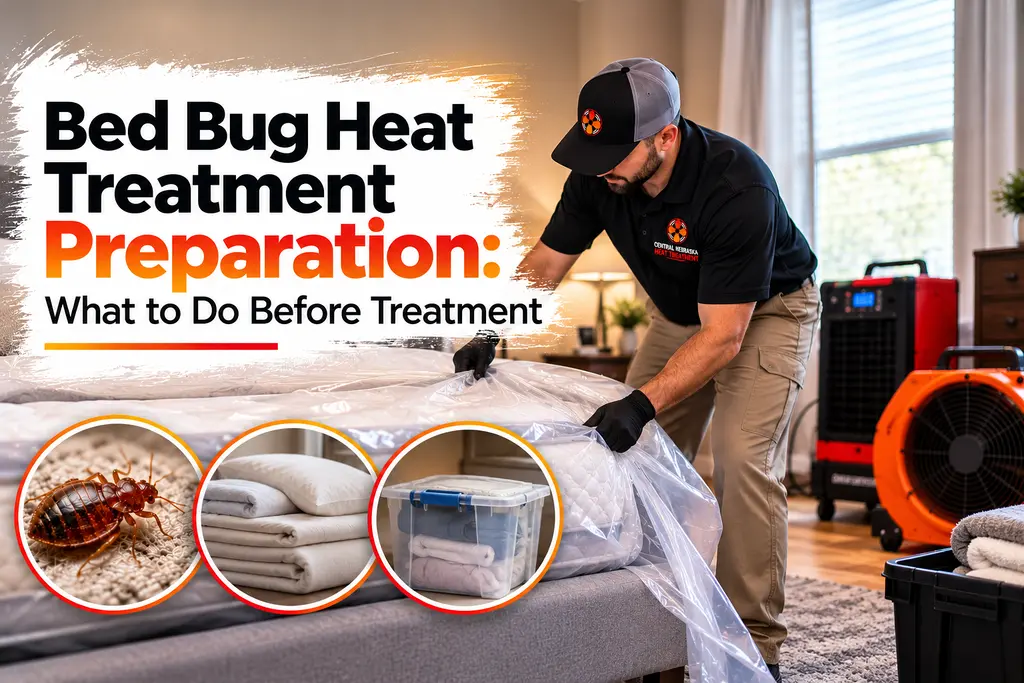
You can help the appointment run more smoothly by following the company’s instructions before technicians arrive. Start with its specific preparation checklist rather than assuming every heat treatment uses the same process.
For practical guidance, review how to prepare your home for professional bed bug heat treatment before the scheduled appointment.
Focus on these essentials:
- Remove items the technician identifies as heat-sensitive, such as certain medications, aerosols, and other vulnerable belongings.
- Reduce unnecessary clutter where instructed so heated air can circulate.
- Identify rooms, furniture, or adjacent areas where bed bugs have been observed.
- Follow instructions for pets, people, food, electronics, and other household items.
- Avoid changing the preparation plan without checking with the treatment provider.
Do not try to heat your home yourself using a thermostat, portable space heater, or propane heater. These methods cannot reliably deliver controlled heat to hidden bed bugs and can create serious safety risks.
Is Same-Day Bed Bug Treatment Realistic?
Often, yes. A properly conducted professional heat treatment can eliminate bed bugs and their eggs in one visit, which is a major advantage over many chemical treatment plans that require follow-up applications.
However, one treatment does not guarantee permanent protection against reinfestation. Bed bugs may be reintroduced on luggage, clothing, used furniture, or other belongings. Follow the technician’s monitoring and prevention instructions after the appointment.
The cooling period and final checks also matter. Do not return to the property until the provider confirms that it is safe to re-enter.
If you are comparing providers, consider the overall service rather than choosing the fastest promised appointment. Central Nebraska Heat Treatment can help homeowners understand the treatment process and the factors that influence scheduling. When reviewing the heat treatment cost in Nebraska, ask what preparation, monitoring, and follow-up support are included.
Five Questions to Ask Before Booking
Before confirming an appointment, ask the provider:
- How many hours should I plan to be away from the property?
- Which belongings must be removed or protected?
- How do you monitor temperatures in mattresses and other potential hiding places?
- What happens if a cold spot does not reach the required conditions?
- What follow-up monitoring or treatment is recommended after the visit?
These questions help you understand both the schedule and the process used to verify treatment effectiveness.
Frequently Asked Questions
How long does professional bed bug heat treatment take?
Whole-room treatments typically take around 6–8 hours, according to the University of Nebraska–Lincoln. Property size, clutter, and temperature conditions can change the total appointment time.
Can heat treatment kill bed bug eggs in one day?
Yes, when the required temperatures and exposure conditions reach the eggs and other hiding locations. Technicians must monitor the treatment rather than assume that the room’s air temperature is sufficient.
Do I need to leave my house during heat treatment?
Yes, follow the provider’s evacuation instructions. People and pets generally must leave the treated area, and re-entry should occur only after the technician confirms it is safe.
Will I need a second heat treatment?
A properly conducted heat treatment can eliminate an infestation in one visit, but follow-up inspections or additional measures may be recommended if activity continues or bed bugs are reintroduced.
What is the biggest factor that delays heat treatment?
Uneven heat distribution is a major factor. Clutter, dense furniture, and insulated hiding places can slow thermal penetration and require additional monitoring or equipment adjustments.
Final Thoughts: Plan for a Thorough Treatment, Not Just a Fast One
Professional bed bug heat treatment usually takes several hours, with 6–8 hours being a useful planning estimate for Nebraska homeowners. Preparation, controlled heating, exposure verification, and safe re-entry all contribute to the appointment. Central Nebraska Heat Treatment can help homeowners understand the process and plan for the treatment day. Allow enough time for a thorough treatment rather than focusing only on the earliest possible finish.