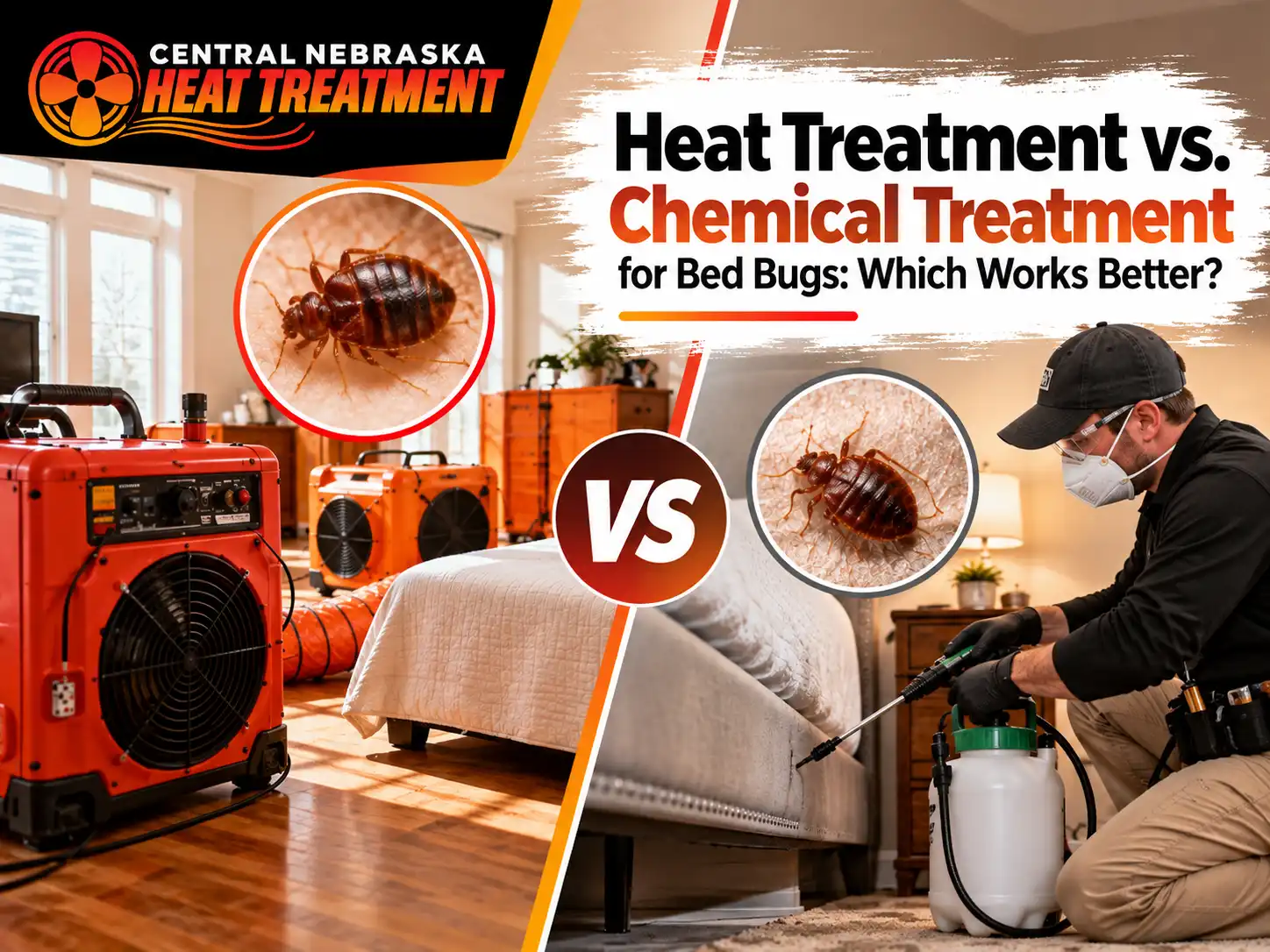

Bed bugs are difficult enough to manage when they stay near a mattress. Finding signs around baseboards, behind loose wallpaper, inside a couch, or near wall gaps raises a bigger concern: can treatment reach insects that are hidden from view?
Professional heat treatment can kill bed bugs in furniture crevices and certain wall voids, but only when sufficient heat reaches those hiding places for the required time. Equipment alone does not guarantee success. Technicians must manage airflow, monitor temperatures, and identify areas where insulation or dense materials may slow heat movement.
Can Heat Actually Reach Bed Bugs Inside Walls?
Heat does not spread evenly through every material. Open areas warm faster than a thick sofa arm or insulated wall cavity, which is why professional treatment involves more than turning on heaters and waiting.
Bed bugs hide near places where people rest, including mattress seams, bed frames, upholstered furniture, baseboards, cracks, and gaps around wall fixtures. If they move into a wall void, technicians must assess the construction and likely hiding locations.
| Important note: A warm room does not prove that every hidden space is hot enough. The temperature in the coolest or hardest-to-reach location matters more than the reading beside a heater. |
Why Furniture and Wall Voids Create Cold Spots
Materials transfer heat at different rates. A wooden frame, thick sofa, pile of belongings, and insulated wall cavity will not warm equally. Tightly packed furniture can also block airflow.
| Hiding place | Why heat may take longer | What needs checking |
| Sofa seams and cushions | Dense padding and folded fabric slow heat movement | Seams, undersides, cushion gaps |
| Wooden furniture joints | Overlapping parts create sheltered spaces | Drawers, joints, screw holes |
| Baseboards and trim | Narrow gaps restrict airflow | Loose trim, cracks, wall openings |
| Wall voids | Insulation and enclosed cavities limit heat transfer | Construction, access, temperature |
| Cluttered storage | Stacked items block circulation | Boxes, bags, corners |
Wall voids deserve particular attention. Sealed or heavily insulated spaces can be difficult to warm consistently, so suspected activity deep inside a wall may require a targeted method alongside room heating.
How Professionals Check Whether Heat Reaches Hidden Areas
Professionals plan how to move heat around the room and check temperatures in multiple locations. They may use fans, reposition furniture, open drawers, and separate items so warm air reaches shielded surfaces.
Temperature probes measure selected points rather than relying on a thermostat or heater display. Technicians monitor readings in difficult locations, including furniture interiors and suspected hiding places.
A typical monitoring process includes:
- Inspecting likely harborages: Check bed frames, upholstered furniture, baseboards, cracks, and reported activity areas.
- Planning equipment placement: Position heaters and fans to reduce stagnant air and improve heat distribution.
- Checking difficult locations: Use probes where materials or layout may slow warming.
- Adjusting the setup: Move equipment or furniture when readings reveal cold spots.
- Confirming exposure: Maintain the required temperature for the required time at relevant locations, not just in the room center.
The U.S. Environmental Protection Agency identifies at least 120°F (about 49°C) for 90 minutes as one benchmark for treating infested items or areas, including against eggs. Actual requirements depend on equipment, materials, and the treatment plan; this benchmark does not prove every wall cavity has reached those conditions.
What Makes Heat Treatment More Effective?
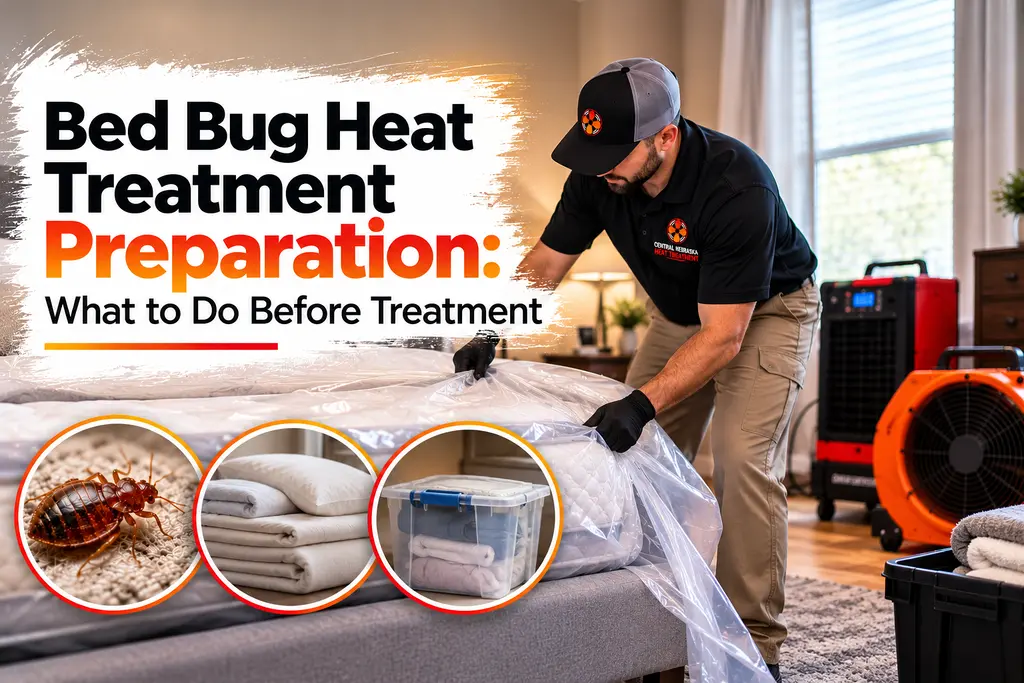
Preparation affects heat circulation. Clutter, packed furniture, closed drawers, and items stacked against walls can block airflow, so technicians may request specific steps before treatment.
Before treatment, residents should generally:
- Follow instructions for clothing, bedding, and personal belongings.
- Avoid moving potentially infested items into untreated rooms.
- Tell the technician where bugs or signs have been found.
- Remove or protect heat-sensitive items as directed.
- Leave access around furniture and wall edges when requested.
Do not dismantle wall fixtures, open electrical components, or move heavy furniture unless the technician asks you to. Preparation should improve access without creating electrical, fire, or injury risks.
When Heat Alone May Not Be Enough
Heat leaves no protective residue. Bed bugs brought back after treatment can start a new infestation, and nearby units may need inspection if activity is moving between apartments.
If a hiding place cannot be heated reliably, a technician may recommend targeted treatment or monitoring. Ask what was treated, which areas were difficult to access, and whether follow-up checks are needed.
| Warning: Do not try to heat a home with space heaters, a fireplace, or by turning up the thermostat. These methods cannot provide controlled, even treatment and can create serious fire and safety hazards. |
Choosing a Heat Treatment Plan in Central Nebraska
Central Nebraska homes vary in age, insulation, and layout. Older properties, newer insulated homes, and multi-unit buildings can present different airflow challenges, so inspection should account for the actual structure.
When discussing service with Central Nebraska Heat Treatment, ask how temperatures will be monitored in furniture and difficult areas, how wall-void activity will be handled, and what follow-up monitoring is recommended.
Frequently Asked Questions
Can professional heat treatment kill bed bugs inside walls?
It can when sufficient heat reaches the insects for the required exposure time. Insulation, enclosed cavities, and limited airflow can make some spaces harder to treat, so inspection and temperature monitoring are important.
Does heat treatment reach inside couches and chairs?
It can reach many hiding places, including seams, joints, and spaces beneath cushions. Dense padding and tightly assembled sections may warm more slowly, making furniture positioning and temperature checks important.
How do technicians know hidden areas are hot enough?
They use temperature probes in selected locations that may warm slowly. A heater display or single room reading cannot confirm that every difficult location has received adequate exposure.
Should I remove baseboards before heat treatment?
Do not remove baseboards unless the pest management professional recommends it. The technician should inspect suspected gaps and decide whether additional access or a targeted method is needed.
Can bed bugs return after professional heat treatment?
Yes. Heat provides no lasting residual protection. Bed bugs can be reintroduced through luggage, furniture, clothing, or movement from nearby infested areas, so monitoring and prevention remain important.
Final Thoughts: Reaching the Hiding Places Matters Most
Professional heat can reach bed bugs hidden in furniture and some wall spaces, but success depends on airflow, insulation, access, material density, and temperature monitoring.
Tell the technician about activity behind trim, inside furniture, or in wall gaps. Central Nebraska Heat Treatment checks difficult areas during treatment and provides follow-up services as needed.